Geology of Morocco: Mountains, Rocks and Natural Landscapes
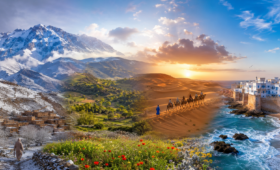
The geology of Morocco is remarkably diverse. The country contains ancient Precambrian rocks, folded mountain chains, volcanic areas, sedimentary basins, deep valleys and vast desert landscapes.
Morocco’s location in northwestern Africa, close to the boundary between the African and Eurasian plates, has created a complex geological structure. Millions of years of tectonic activity, erosion, sedimentation and volcanic activity have shaped the landscapes travellers see today.
The Main Geological Regions of Morocco
Morocco can be divided into several major geological regions: the Rif Mountains, the Moroccan Meseta, the Middle Atlas, the High Atlas, the Anti-Atlas and the sedimentary basins extending towards the Sahara.
Each region has a different geological history and contains distinctive rocks, landforms and natural resources.
The Rif Mountains
The Rif Mountains extend across northern Morocco along the Mediterranean coast. They form part of the western Mediterranean mountain system created by the long-term convergence between the African and Eurasian tectonic plates.
The Rif contains strongly folded and faulted sedimentary rocks. Its steep mountains, narrow valleys and active faults demonstrate that northern Morocco remains a geologically dynamic region.
This tectonic setting also explains why northern Morocco can experience earthquakes.
The Moroccan Meseta
The Moroccan Meseta consists mainly of ancient Paleozoic rocks shaped during the Variscan mountain-building period. It covers parts of central and western Morocco between the Atlantic coast and the Atlas Mountains.
Over time, erosion reduced ancient mountain systems and created large plateaus. In some areas, younger sedimentary rocks later covered the older geological basement.
The Meseta provides important evidence of Morocco’s geological history before the formation of the modern Atlas Mountains.
The Middle Atlas
The Middle Atlas is a mountain range extending in a northeast-to-southwest direction. Its geological structure includes an ancient basement covered by younger sedimentary rocks, particularly limestone formed in ancient marine environments.
Limestone landscapes have produced caves, springs, cliffs and underground water systems. The region around Ifrane and Azrou also contains volcanic cones, craters and basaltic lava flows associated with relatively recent geological activity.
Today, the Middle Atlas is known for its forests, lakes, plateaus and volcanic landscapes.
The High Atlas Mountains
The High Atlas is Morocco’s most prominent mountain chain and contains Jbel Toubkal, the highest mountain in North Africa.
The geological history of the High Atlas began with the development of large rift basins during the breakup of the supercontinent Pangaea and the opening of the Atlantic Ocean. These basins accumulated thick layers of continental and marine sediments.
Later tectonic compression reactivated older faults, folded the sedimentary rocks and raised the High Atlas Mountains. Geological research describes the High Atlas as an inverted ancient rift system.
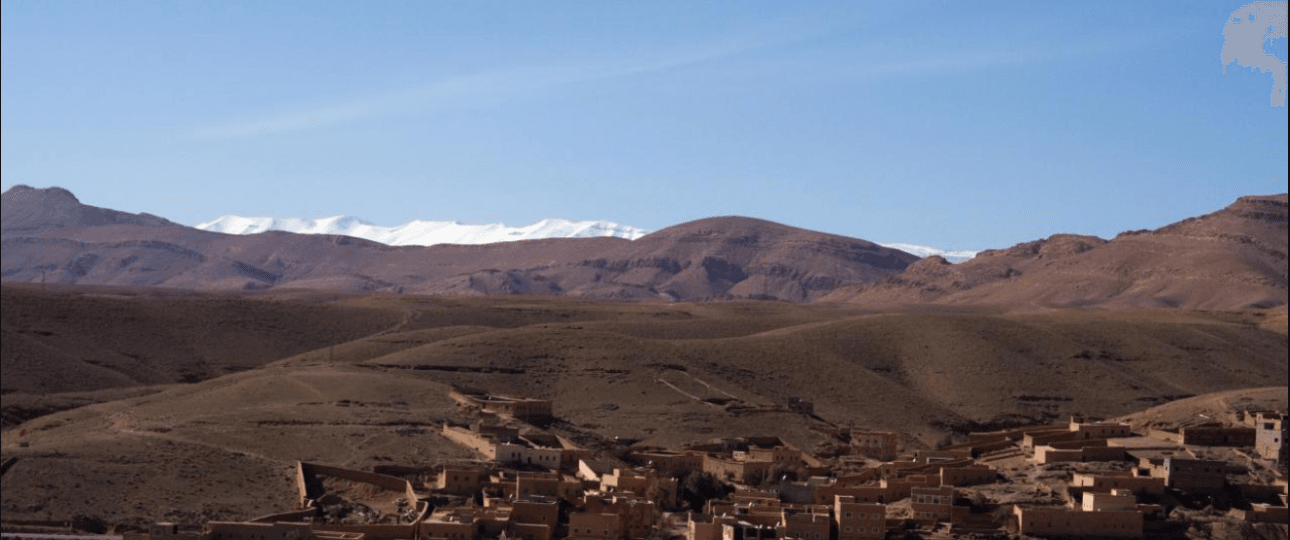
The mountains contain limestone, sandstone, shale, volcanic rocks and exposures of an older crystalline basement. Erosion by rivers, snow and changing climate created the spectacular valleys, gorges and peaks visible today.
The Anti-Atlas
The Anti-Atlas, located south of the High Atlas, contains some of the oldest exposed rocks in Morocco. Parts of its geological basement date back to Precambrian time and preserve evidence of very ancient volcanic activity, oceanic environments and continental collisions.
Younger Paleozoic sedimentary rocks surround the ancient basement and often form impressive folded ridges. Erosion has exposed the older rocks through geological structures known as inliers or windows.
The Anti-Atlas is famous for its dry mountains, colourful rock formations and broad desert valleys. Its landscape was also influenced by later uplift and the reactivation of ancient geological faults.
Morocco’s Sedimentary Basins
Morocco contains several large sedimentary basins filled with limestone, sandstone, clay, marl and other deposits. These rocks accumulated in ancient seas, rivers, lakes and desert environments over millions of years.
Some Moroccan basins contain important phosphate deposits. Others preserve marine fossils, dinosaur remains and evidence of past environments.
The changing rock layers reveal that parts of Morocco were repeatedly covered by ancient seas before being raised above sea level.
Volcanic Landscapes
Volcanic activity has also contributed to Morocco’s geological diversity. Volcanic rocks can be found in the Middle Atlas, the Anti-Atlas, Jbel Siroua and several other regions.
Around Azrou and Ifrane, visitors can observe volcanic cones, craters and basaltic plateaus. Jbel Siroua, situated between the High Atlas and Anti-Atlas, is an ancient volcanic massif surrounded by dramatic valleys and traditional villages.
These volcanic formations help scientists understand the geological processes occurring beneath Morocco.
Fossils and Dinosaurs in Morocco
Morocco is internationally famous for its fossils. The Atlas Mountains and desert regions contain ammonites, trilobites, marine reptiles, dinosaur bones and other remains of prehistoric life.
The phosphate basins also preserve important fossils from the end of the age of dinosaurs and the beginning of the Cenozoic Era.
Fossils provide valuable information about the ancient seas, deserts and ecosystems that once existed across Morocco.
How Geology Shaped Moroccan Life
Morocco’s geology has influenced the location of settlements, agricultural valleys, water sources, roads and traditional building materials.
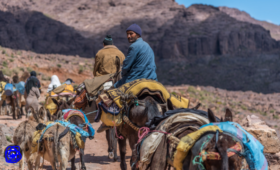
Mountain communities often use local stone and earth in their architecture. Rivers flowing from the Atlas Mountains supply water to valleys, plains and oases, while mineral resources have contributed to the country’s economy.
Geology has also created many of Morocco’s most beautiful destinations, including the Todra Gorge, Dades Valley, Ait Bouguemez, Jbel M’Goun, Toubkal National Park and the volcanic landscapes of Jbel Siroua.
Discover Morocco’s Landscapes
The geological structure of Morocco tells a story spanning billions of years. Ancient rocks, tectonic collisions, vanished oceans, volcanic eruptions and continuous erosion have produced the country’s extraordinary natural diversity.
Travelling through Morocco is therefore more than a cultural experience. It is also a journey through the geological history of the Earth.
Atlas Escape Morocco offers mountain treks, desert adventures and cultural tours that allow travellers to discover Morocco’s remarkable landscapes with experienced local guides.